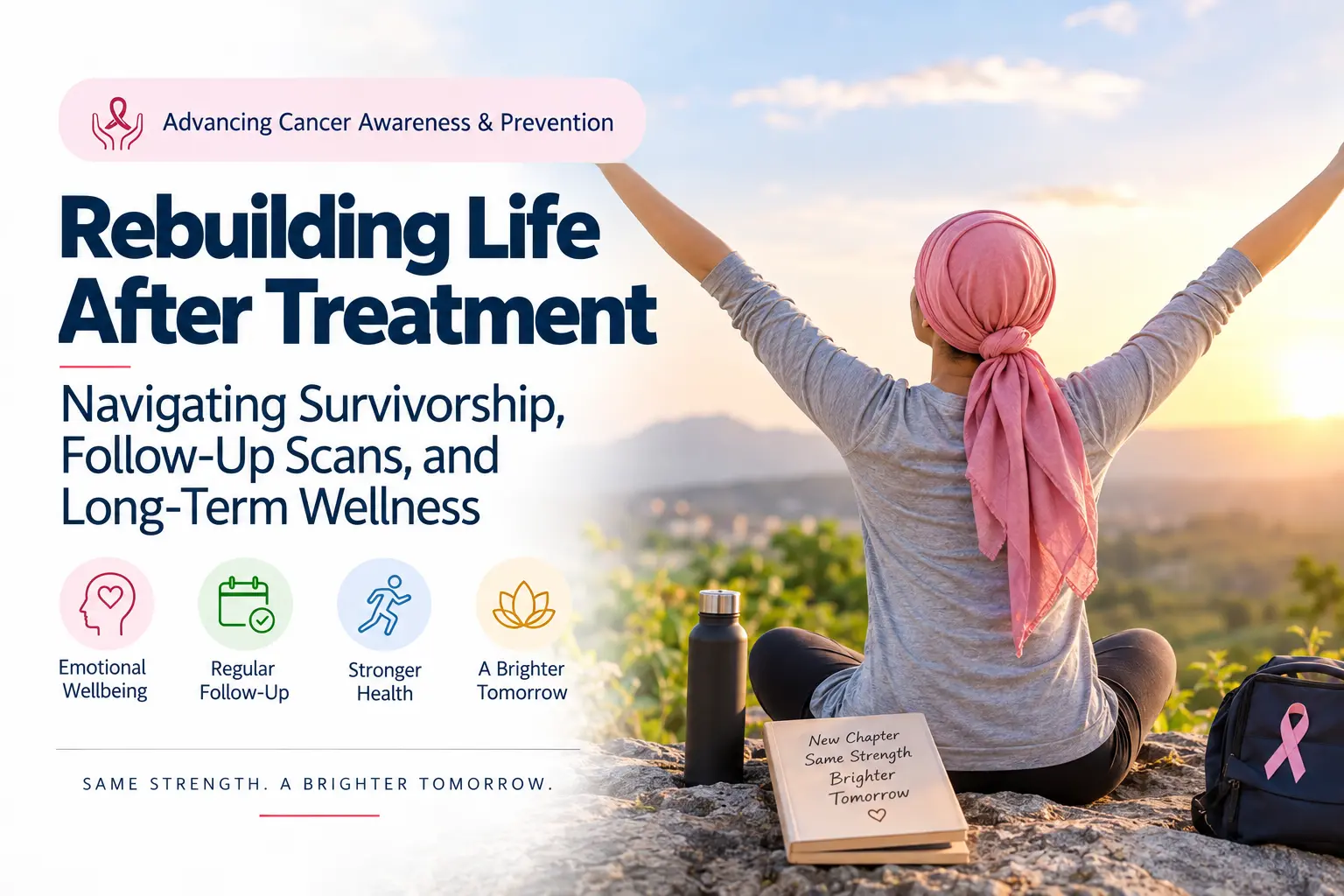
Rebuilding Life After Treatment: Navigating Survivorship, Follow-Up Scans, and Long-Term Wellness
Completing active cancer treatment is a monumental milestone. For months or even years, your calendar has likely been defined by chemotherapy cycles, radiation sessions, doctor consultations, and hospital visits. Hearing that treatment is finished brings an immense wave of relief and joy.
However, many patients are surprised to discover that the transition into survivorship can also bring a mix of complex emotions. Rebuilding your routine, managing “scanxiety,” and adjusting to your new normal require patience, self-compassion, and proactive health strategies.
The Emotional Landscape of Survivorship
When active treatment ends, the constant safety net of daily or weekly medical oversight suddenly shifts. It is completely normal to experience:
- The “Now What?” feeling: Moving from a high-intensity treatment schedule to an open schedule can feel jarring or disorienting.
- Scanxiety: Anxiety leading up to routine follow-up scans or blood tests is one of the most common challenges survivors face.
- Fear of recurrence: Wondering whether symptoms mean cancer has returned is a natural worry that gradually softens over time as you build distance from your diagnosis.
Be gentle with yourself. Healing involves your emotional well-being just as much as your physical recovery.
Navigating Follow-Up Care and Surveillance
Your cancer journey does not end with your final treatment session; it transitions into a structured survivorship phase. Follow-up care is critical to monitor your recovery and catch any potential issues early.
- Stick to Your Surveillance Schedule
- Your oncologist will provide a personalized follow-up schedule detailing how often you need physical examinations, blood work, imaging scans (such as CT, MRI, or PET scans), or specialized screenings.
- Keep these appointments religiously, even when you feel completely healthy.
- Know the Warning Signs
- Educate yourself on the specific post-treatment symptoms or warning signs to watch out for depending on your original diagnosis.
- Never hesitate to contact your care team if you notice persistent, unexplained symptoms between scheduled visits.
- Maintain a Centralized Health Record
- Keep copies of your pathology reports, treatment summaries, surgical notes, and imaging results in a dedicated folder or digital file. This makes transitioning between specialists or seeking secondary opinions much smoother.
Long-Term Physical Wellness
Rebuilding your body after cancer treatment takes time. Focus on sustainable, long-term health habits:
- Gradual physical activity: Rebuild your strength slowly with activities you enjoy, such as walking, gentle swimming, or yoga.
- Balanced nutrition: Continue focusing on whole foods, lean proteins, fresh fruits, vegetables, and adequate hydration to support metabolic health.
- Manage lingering side effects: If you experience chronic fatigue, neuropathy, or digestive adjustments, work with your medical team or specialized therapists to manage them effectively.
Embracing Your New Normal
Survivorship is not about returning to the exact person you were before your diagnosis; it is about moving forward with a renewed perspective, a deeper appreciation for your body’s resilience, and proactive health management.
Good cancer care begins with accurate information—and continues with personalized support at every step.
📞 Call for more information, awareness, preventive health check up, second opinion and screening test for cancer: 098150 48348
💬 Connect on WhatsApp: 098150 48348